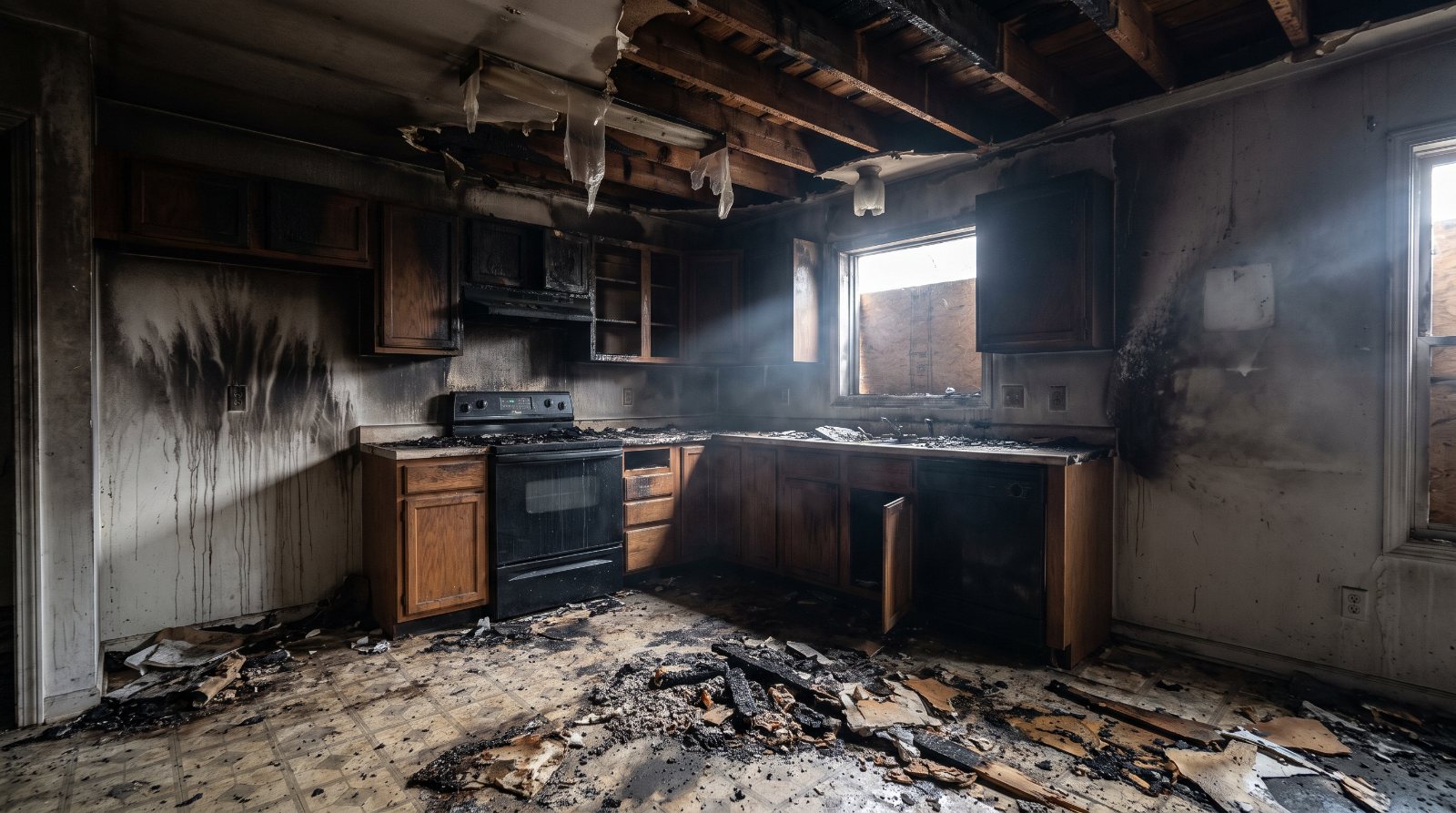
What a fire actually leaves behind
Edinboro combines a borough core, university-area rentals, and lake properties. Rental fires are their own problem: multiple tenants, split responsibility, and landlords and occupants with different insurance and different priorities. We document clearly enough that everyone is working from the same record.
Cooking fires dominate in the student rental stock. In the older borough housing it is heating equipment and electrical.
Edinboro gets serious snow, so a winter fire often means a structure that is open to the weather with a foot of snow on the way. Board-up and tarping is not a formality here, it is the difference between a fire loss and a fire plus water loss.
Do not wipe soot, do not run the HVAC, and do not plug in anything that was exposed to smoke or heat. Photograph everything before it is touched, and do not enter until the fire department releases the structure.
All services in Edinboro
Working with your carrier
We document the loss, provide a written scope, and deal with your adjuster directly. You choose who does the work — that decision is yours, not your insurance company's.
How claims work →The sequence after a fire
Board-up and tarping
An open structure keeps taking weather. Windows, doors and roof secured before anything else starts.
Smoke mapping
Where the smoke actually travelled, which is rarely only where the fire was. HVAC, wall cavities and upper floors.
Soot and odor removal
Surface-appropriate cleaning, duct cleaning, contents processing, and odor treatment at the source rather than over it.
Repair and rebuild
Drywall, trim, flooring and paint, coordinated with your adjuster so the claim and the work stay aligned.
Edinboro fire questions
How fast can you get to Edinboro?
About 40 minutes, covering the borough, Washington Township, and the lake properties.
I am a landlord. Who deals with the tenant’s belongings?
Contents handling is usually the tenant’s policy and the structure is yours. We inventory and document both so the two claims do not collide, and we tell each party what we are doing.
Can the house be occupied during restoration?
Sometimes, depending on the smoke spread, the HVAC, and whether power and water are on. We give you a straight answer at the walkthrough rather than after you have moved back in.