Mold is a moisture problem wearing a costume
Lakeshore humidity is the driver in northern Harborcreek. Summer dew points off Lake Erie keep basements and crawlspaces damp for months, and any organic material stored down there grows something.
Inland, the pattern is crawlspaces on farm and rural parcels: exposed soil, no vapor barrier, and vented crawlspaces that pull humid summer air into a cool space, which condenses it exactly where you do not want it.
Seasonal and second properties along the lake add the vacancy problem. A closed house with no dehumidification through a humid summer can grow mold across an entire basement with no leak involved at all.
Do not disturb visible growth, and do not run fans on it — that moves spores through the building. Photograph what you can see, note when you first smelled or saw it, and leave it alone until someone meters the space.
All services in Harborcreek
Working with your carrier
We document the loss, provide a written scope, and deal with your adjuster directly. You choose who does the work — that decision is yours, not your insurance company's.
How claims work →The sequence on a mold job
Assessment
On-site inspection, moisture mapping and a written scope. $250, credited back to your invoice if you hire us for the remediation.
Find the water
Mold is a symptom. Until the moisture source is identified, remediation is temporary and everyone knows it.
Containment and removal
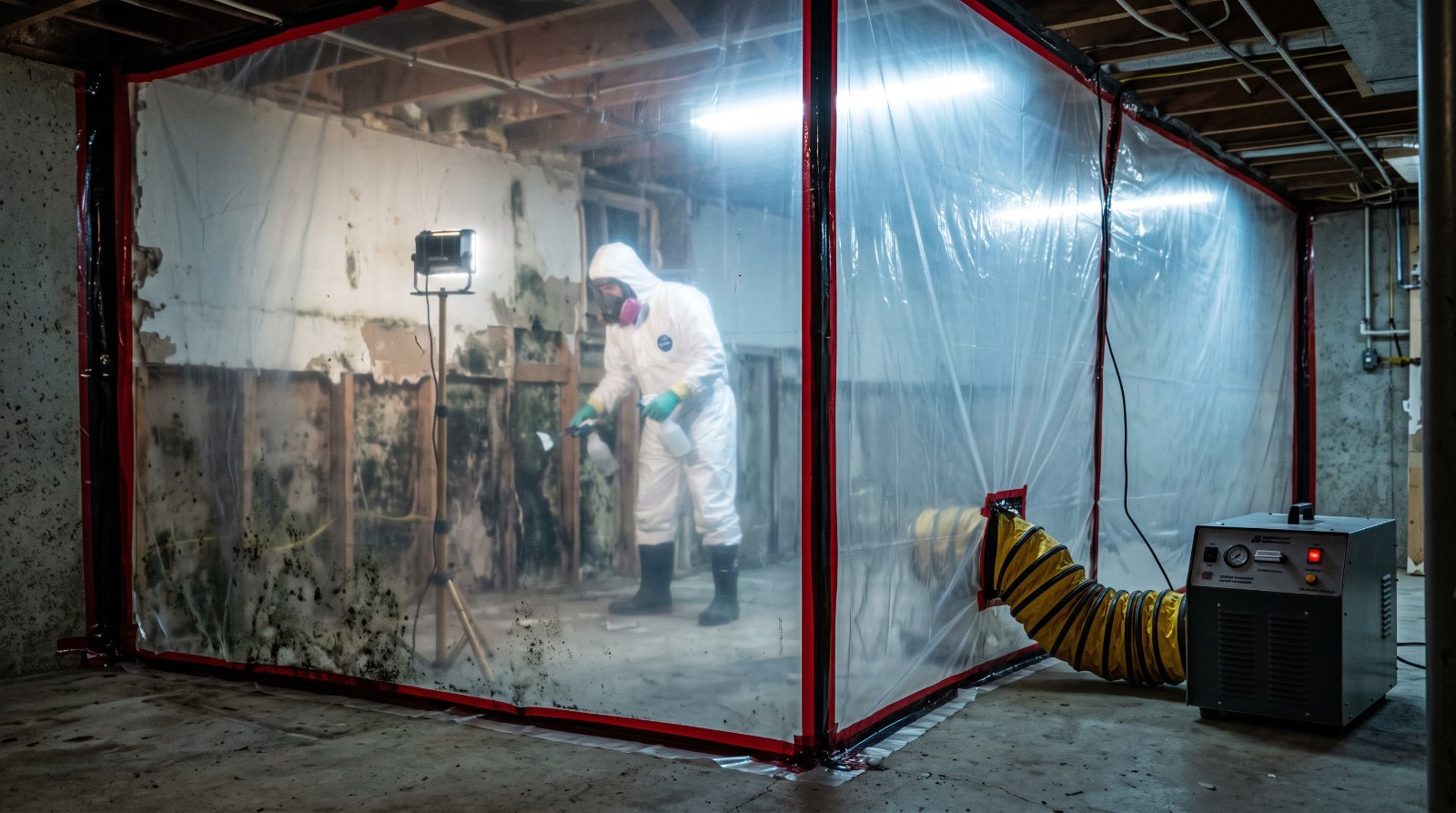
Sealed containment, negative air, HEPA filtration, and removal of affected porous material rather than surface treatment.
Fix the cause
Vapor barrier, drainage, ventilation or dehumidification, so it does not return next season.
Harborcreek mold questions
Why is my crawlspace wet in the summer with no leak?
Warm humid air entering a cool crawlspace condenses on every surface. That is a ventilation and vapor barrier problem, not a plumbing one. Encapsulation and a dehumidifier solve it.
What does a mold assessment cost?
$250, credited back if you hire us for the remediation.
We only use the place in summer. How do we keep mold out over winter?
Keep a low heat setpoint or run a humidistat-controlled dehumidifier, close the crawlspace vents, and have someone look at it monthly. A spring opening discovery is the most expensive mold job we do.