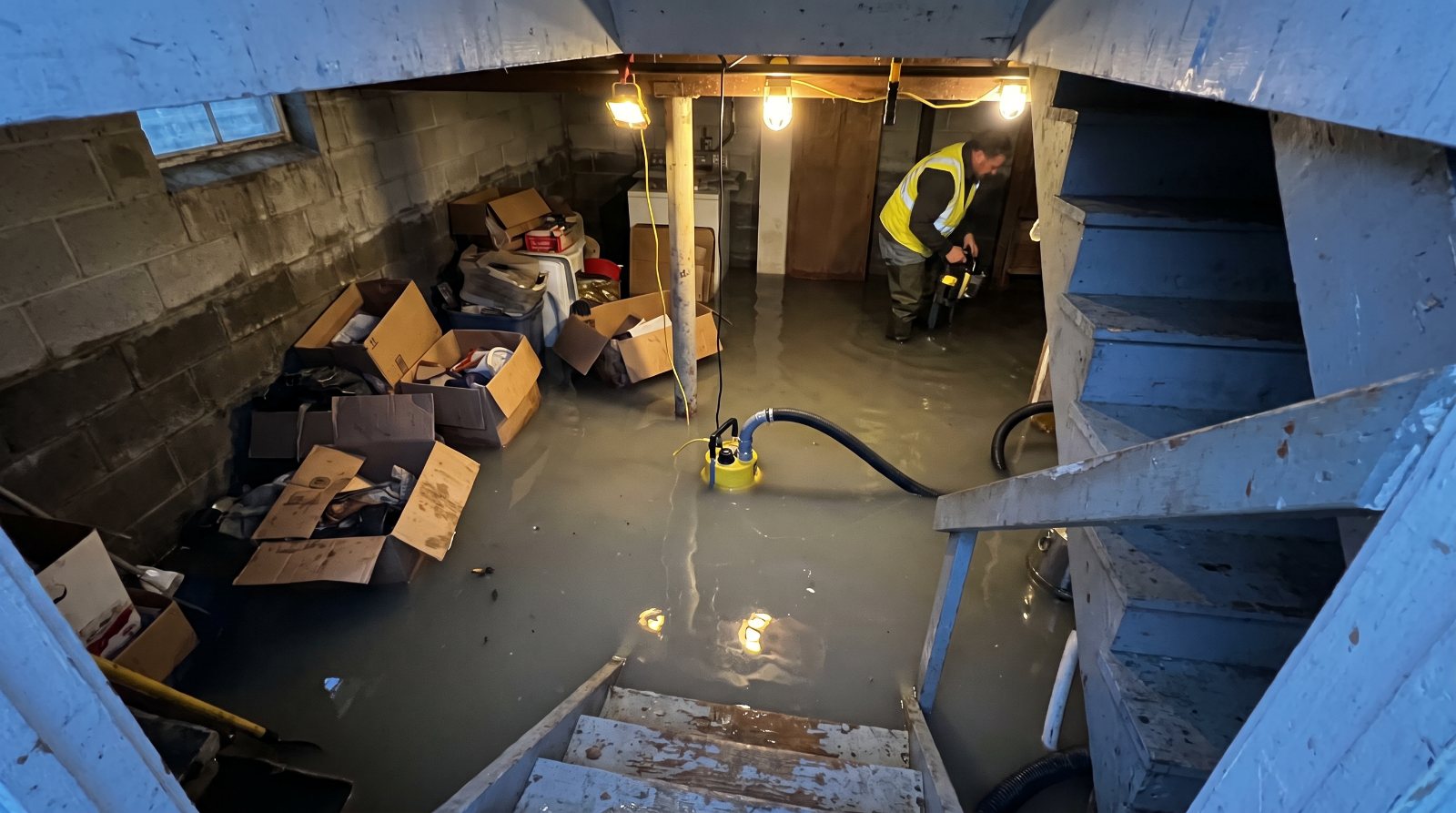
Water doesn't stop at what you can see
By the time there's standing water on the floor, water has already moved into the wall cavity, under the subfloor, and into the insulation. That hidden moisture is what causes the second, more expensive problem — swelling, delamination, and mold — weeks after the visible water is gone.
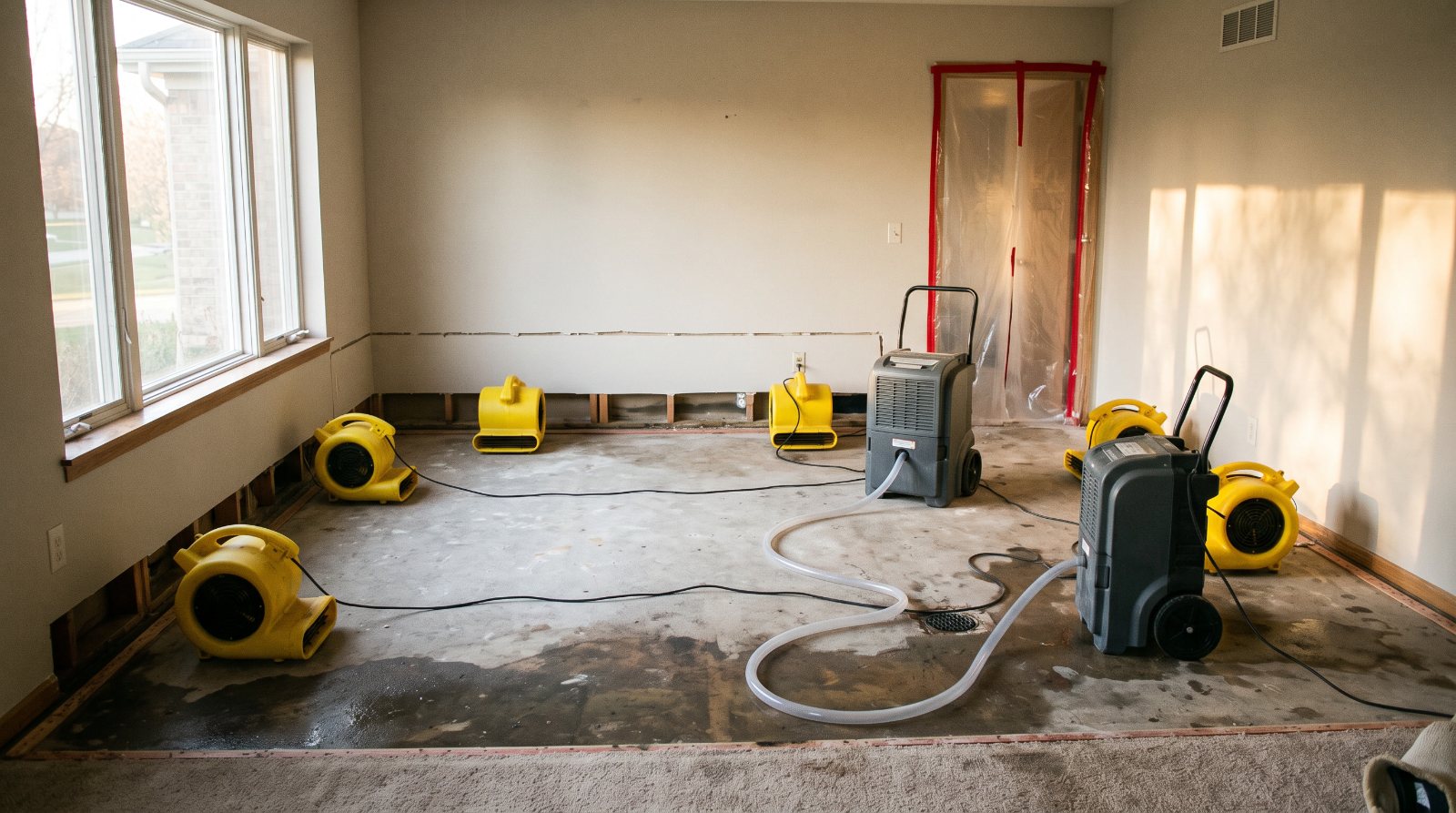
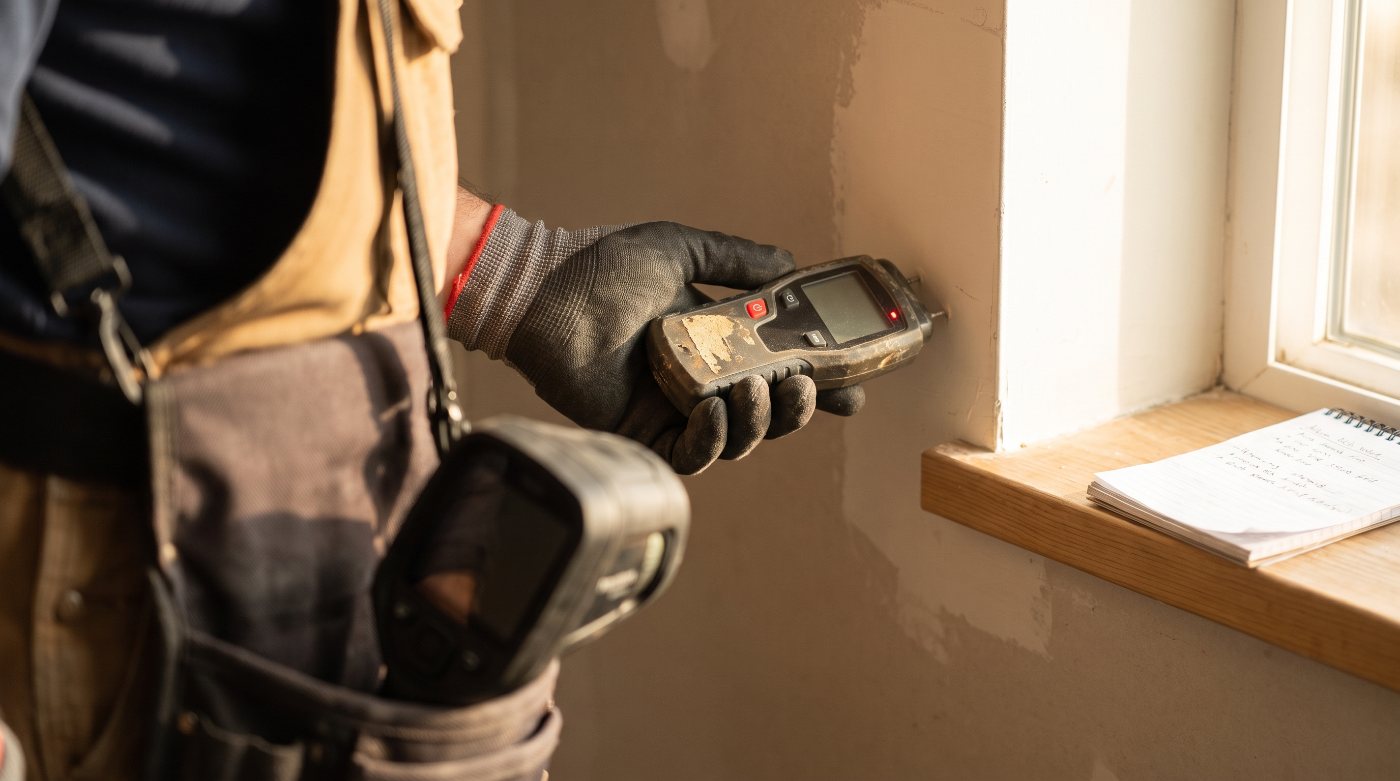
So the job isn't mopping up. It's finding every wet material with meters and thermal imaging, removing only what genuinely can't be dried, and running enough air movement and dehumidification to pull the structure back to its normal moisture content — then proving it with daily readings.
Shut the water main off if it's a supply leak. Kill power at the breaker to the affected area if water is near outlets — never wade into standing water to reach the panel. Lift what you can. Photograph everything before it's touched.
What's included
The clock is the whole problem
Water spreads
It wicks up drywall, saturates insulation, and travels along joists into rooms that were never wet.
Materials swell
Laminate delaminates, particle board swells, hardwood cups, and carpet pad breaks down.
Mold starts
Now it's two jobs. Remediation and clearance testing get added to the drying scope.
Claim risk
Carriers can reduce or deny for failure to mitigate. Delay is the one thing insurance rarely covers.
The same five failures, every winter
Water damage questions
Can you save my hardwood floor?
Often, if we get to it fast. Specialty floor drying mats pull moisture up through the boards, and cupping frequently relaxes as the wood equalizes. Once the finish has crowned or the boards have separated at the seams, replacement is usually the honest answer — and we'll say so.
Why do you have to cut the drywall?
Because insulation inside a wall cavity holds water and won't dry from the outside. A flood cut a foot or two above the water line lets us remove the wet insulation and dry the framing. We cut the minimum the readings justify, and we put it back.
Is a flooded basement covered by insurance?
A burst pipe or failed water heater generally is. Groundwater seepage and surface flooding generally are not, unless you carry a flood policy or a water backup endorsement. Sewer backup needs that specific endorsement in most Pennsylvania policies. We'll look at your declarations page with you before making promises.
Can I just rent fans from a hardware store?
For a small, clean-water spill caught in the first hour, sometimes. For anything larger, box fans move air without removing moisture from it — you end up pushing humidity into the rest of the house. Commercial dehumidification is what actually dries a structure, and without meters you have no way to know when you're done.
How much does water damage restoration cost?
It depends on how much water, how far it travelled, and what it touched — which is why the assessment is free and the scope is written before work starts. On an insured loss, most homeowners pay their deductible. We'll tell you the number before a fan goes down.