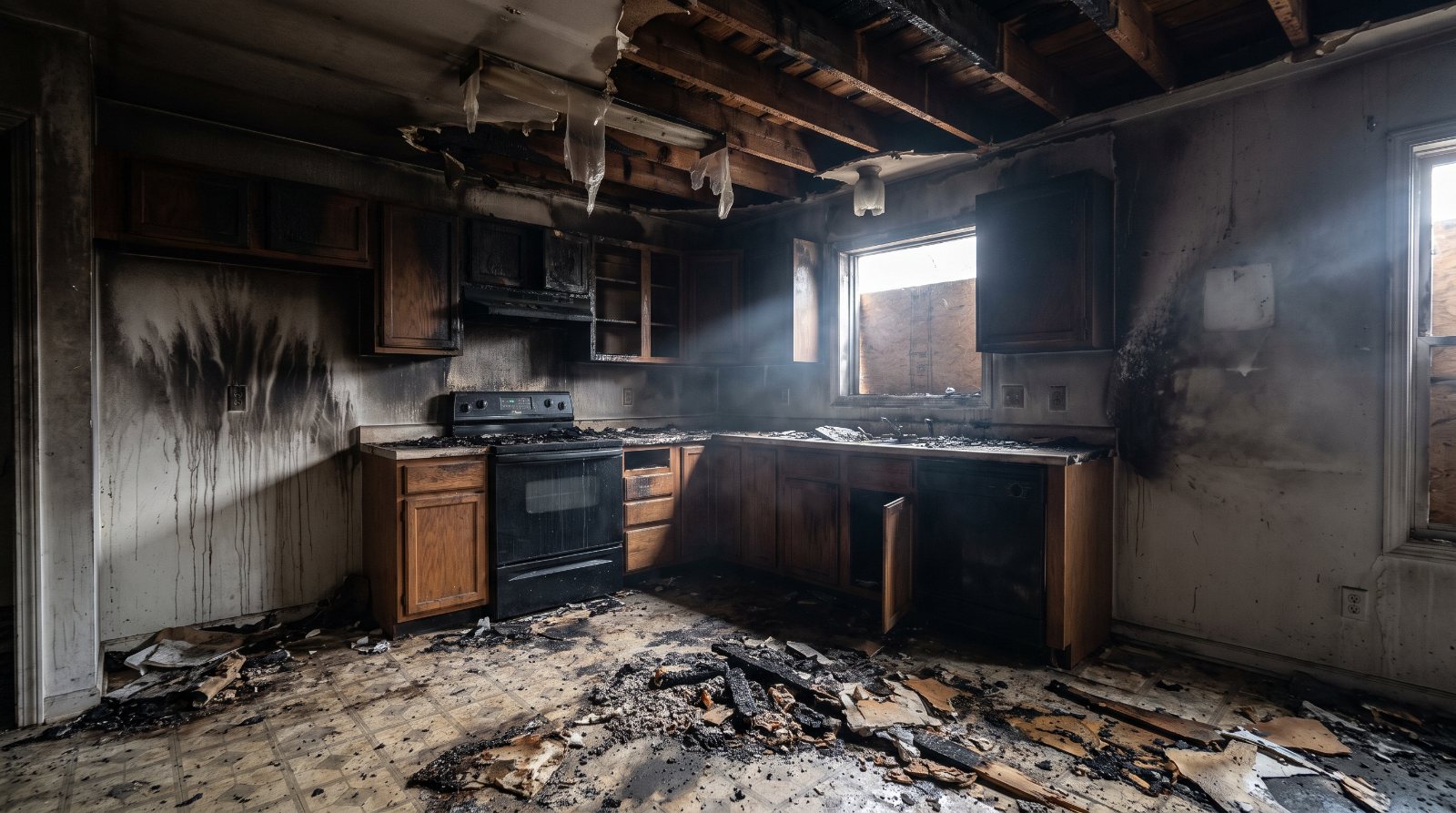
What a fire actually leaves behind
Meadville has a large stock of Victorian and early-century housing, and those buildings behave in a fire the way old buildings do: open balloon-framed cavities, plaster over lath that holds smoke, and layered renovations that hide the smoke path.
Downtown and mixed-use buildings add a commercial dimension. A fire in one unit puts smoke into the units beside and above it, and the restoration has to be sequenced so businesses can reopen while work continues.
Older housing also means more heating-equipment and electrical fires, and more properties where the fire department will pull the service until an electrician signs off.
Do not wipe soot, do not run the HVAC, and do not plug in anything that was exposed to smoke or heat. Photograph everything before it is touched, and do not enter until the fire department releases the structure.
All services in Meadville
Working with your carrier
We document the loss, provide a written scope, and deal with your adjuster directly. You choose who does the work — that decision is yours, not your insurance company's.
How claims work →The sequence after a fire
Board-up and tarping
An open structure keeps taking weather. Windows, doors and roof secured before anything else starts.
Smoke mapping
Where the smoke actually travelled, which is rarely only where the fire was. HVAC, wall cavities and upper floors.
Soot and odor removal
Surface-appropriate cleaning, duct cleaning, contents processing, and odor treatment at the source rather than over it.
Repair and rebuild
Drywall, trim, flooring and paint, coordinated with your adjuster so the claim and the work stay aligned.
Meadville fire questions
How fast can you get to Meadville?
About 55 minutes from our Erie staging point. Crawford County is a standard part of our service area, not an exception.
We own a mixed-use building. Can our tenants stay open?
Often part of the building can keep operating while we work, with containment and negative air separating the work area. We sequence the job around that when it is safe to do so.
How long does smoke odor removal take in an old house?
Longer than in a new one. Plaster, lath, and open cavities hold odor, and the source has to be reached rather than sealed over. We give a realistic schedule at the scope, not an optimistic one.