Mold is a moisture problem wearing a costume
French Creek runs through Meadville and its floodplain defines a lot of our work here. Flood water is contaminated, and porous materials it touched come out rather than getting dried. Mold after a creek flood is a question of how fast the building dried, not whether spores were present.
The older housing stock brings stone foundations, dirt-floor cellars, and generations of finish work over damp masonry. Those cellars were never dry and were never meant to be finished.
Student and rental housing around the college adds the same occupancy-driven pattern as Edinboro: closed windows, weak ventilation, and moisture with nowhere to go.
Do not disturb visible growth, and do not run fans on it — that moves spores through the building. Photograph what you can see, note when you first smelled or saw it, and leave it alone until someone meters the space.
All services in Meadville
Working with your carrier
We document the loss, provide a written scope, and deal with your adjuster directly. You choose who does the work — that decision is yours, not your insurance company's.
How claims work →The sequence on a mold job
Assessment
On-site inspection, moisture mapping and a written scope. $250, credited back to your invoice if you hire us for the remediation.
Find the water
Mold is a symptom. Until the moisture source is identified, remediation is temporary and everyone knows it.
Containment and removal
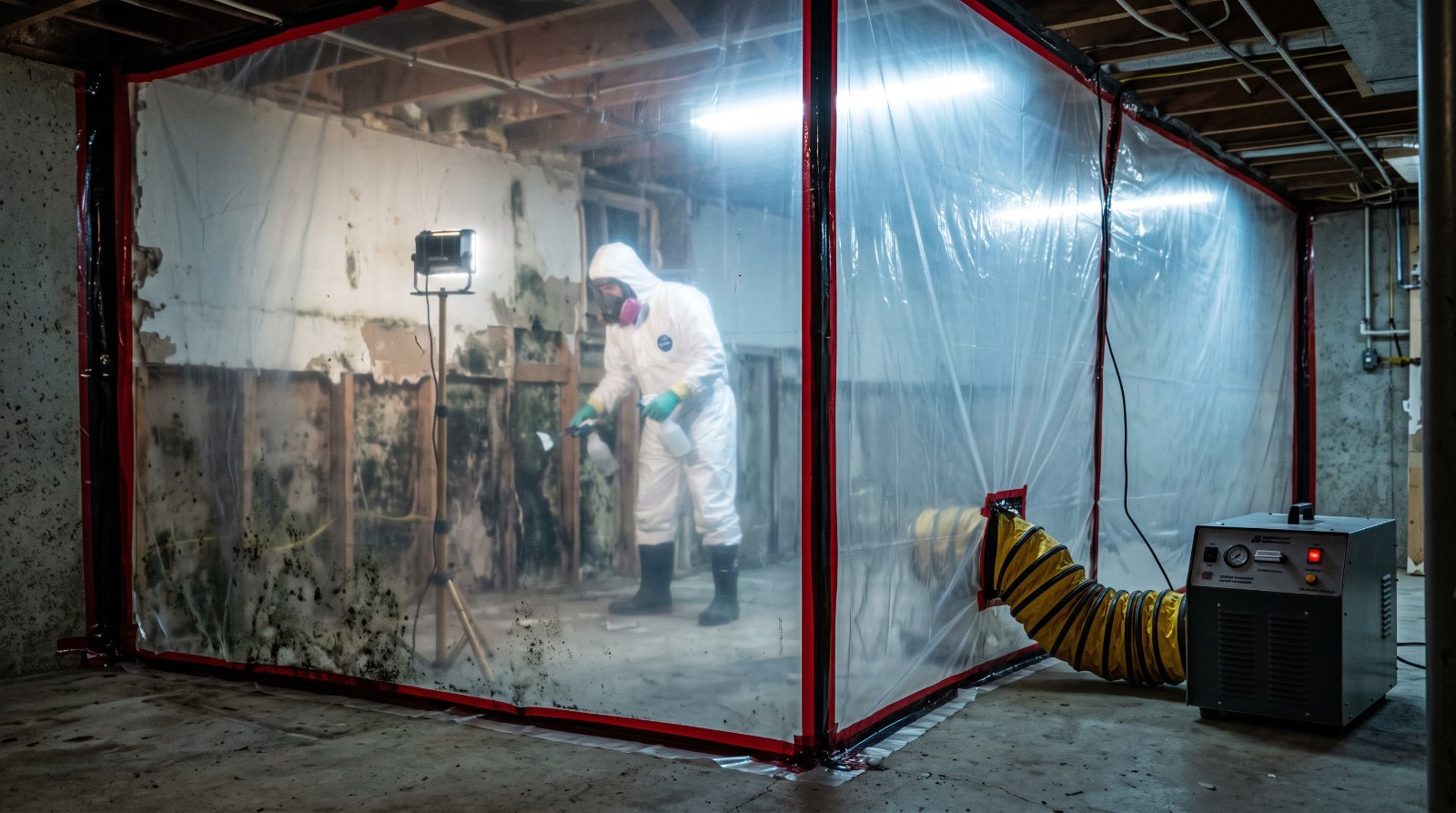
Sealed containment, negative air, HEPA filtration, and removal of affected porous material rather than surface treatment.
Fix the cause
Vapor barrier, drainage, ventilation or dehumidification, so it does not return next season.
Meadville mold questions
The creek flooded my basement. Will mold follow?
If it was not dried within 24 to 48 hours, assume yes. Flood water is contaminated, so the porous materials it touched are removed rather than dried, and the space is decontaminated before rebuilding.
What does a mold assessment cost?
$250, credited back to your invoice if you hire us for the remediation.
My cellar has a dirt floor and always smells. Can that be fixed?
Yes, though it is a moisture-control project rather than a cleaning one: vapor barrier over the soil, drainage, and dedicated dehumidification. Cleaning alone in an old cellar buys you a few months.