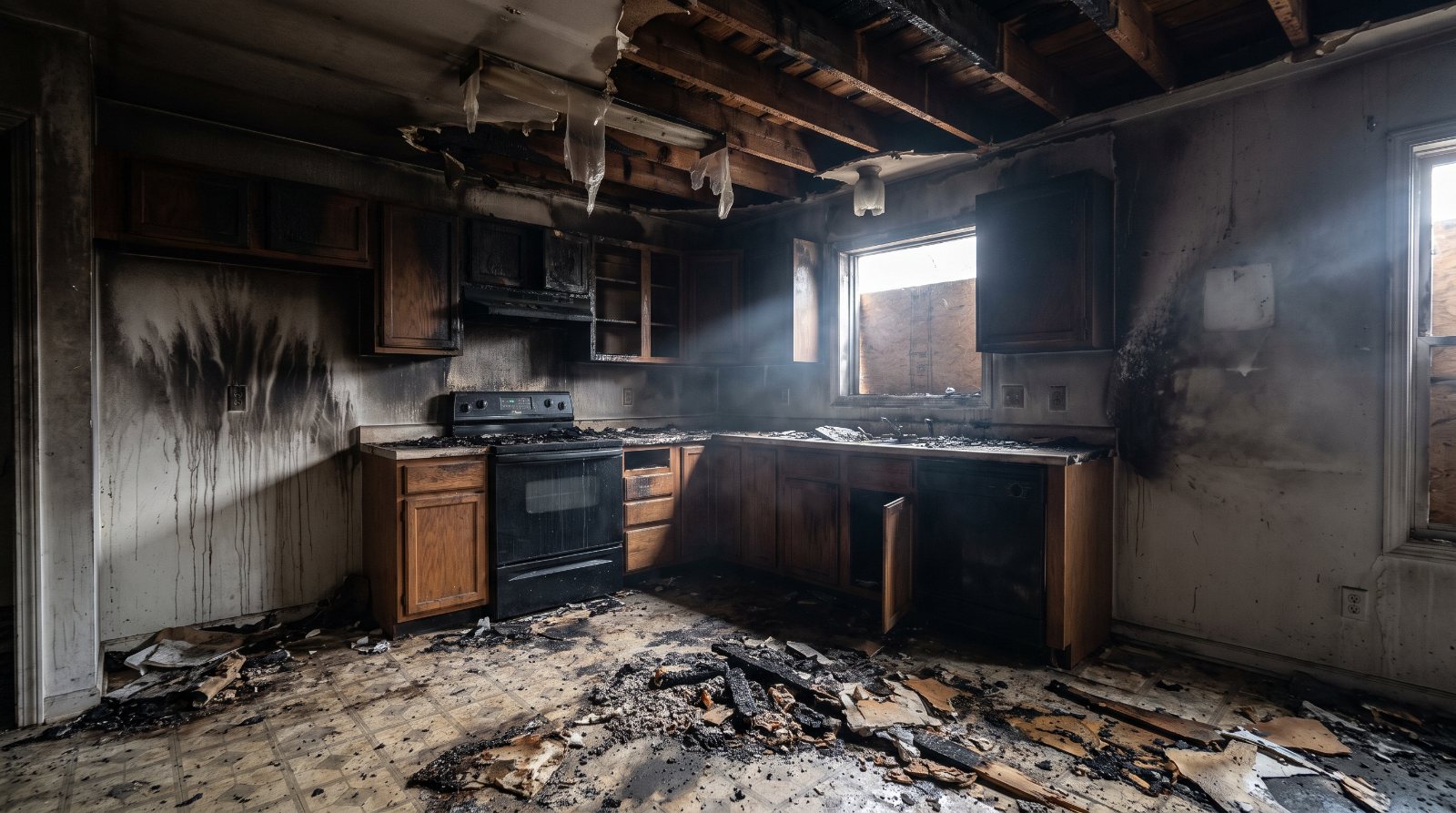
What a fire actually leaves behind
Fairview is a mix of established township housing, newer subdivisions, and older lakeshore properties, and each burns differently. Newer homes fail faster structurally; older ones spread smoke further through open cavities.
Wood stoves and supplemental heat drive our winter fire calls here. So do dryers, which are the most preventable house fire in the county and still one of the most common.
A fire in a newer, tightly built home tends to leave heavier smoke residue inside because there is less air leakage to carry it out. That surprises people who expect a modern house to fare better.
Do not wipe soot, do not run the HVAC, and do not plug in anything that was exposed to smoke or heat. Photograph everything before it is touched, and do not enter until the fire department releases the structure.
All services in Fairview
Working with your carrier
We document the loss, provide a written scope, and deal with your adjuster directly. You choose who does the work — that decision is yours, not your insurance company's.
How claims work →The sequence after a fire
Board-up and tarping
An open structure keeps taking weather. Windows, doors and roof secured before anything else starts.
Smoke mapping
Where the smoke actually travelled, which is rarely only where the fire was. HVAC, wall cavities and upper floors.
Soot and odor removal
Surface-appropriate cleaning, duct cleaning, contents processing, and odor treatment at the source rather than over it.
Repair and rebuild
Drywall, trim, flooring and paint, coordinated with your adjuster so the claim and the work stay aligned.
Fairview fire questions
How fast can you get to Fairview?
About 50 minutes for emergency board-up and stabilization, day or night.
The fire was small. Do I still need a restoration company?
Usually yes, and not because of the flames. Smoke travels, soot is corrosive, and odor sets into porous materials within days. A small fire cleaned properly stays small.
Will you work directly with my insurance company?
Yes. We document the loss, provide a written scope, and communicate with your adjuster. You still choose who does the work — that is your decision, not the carrier’s.