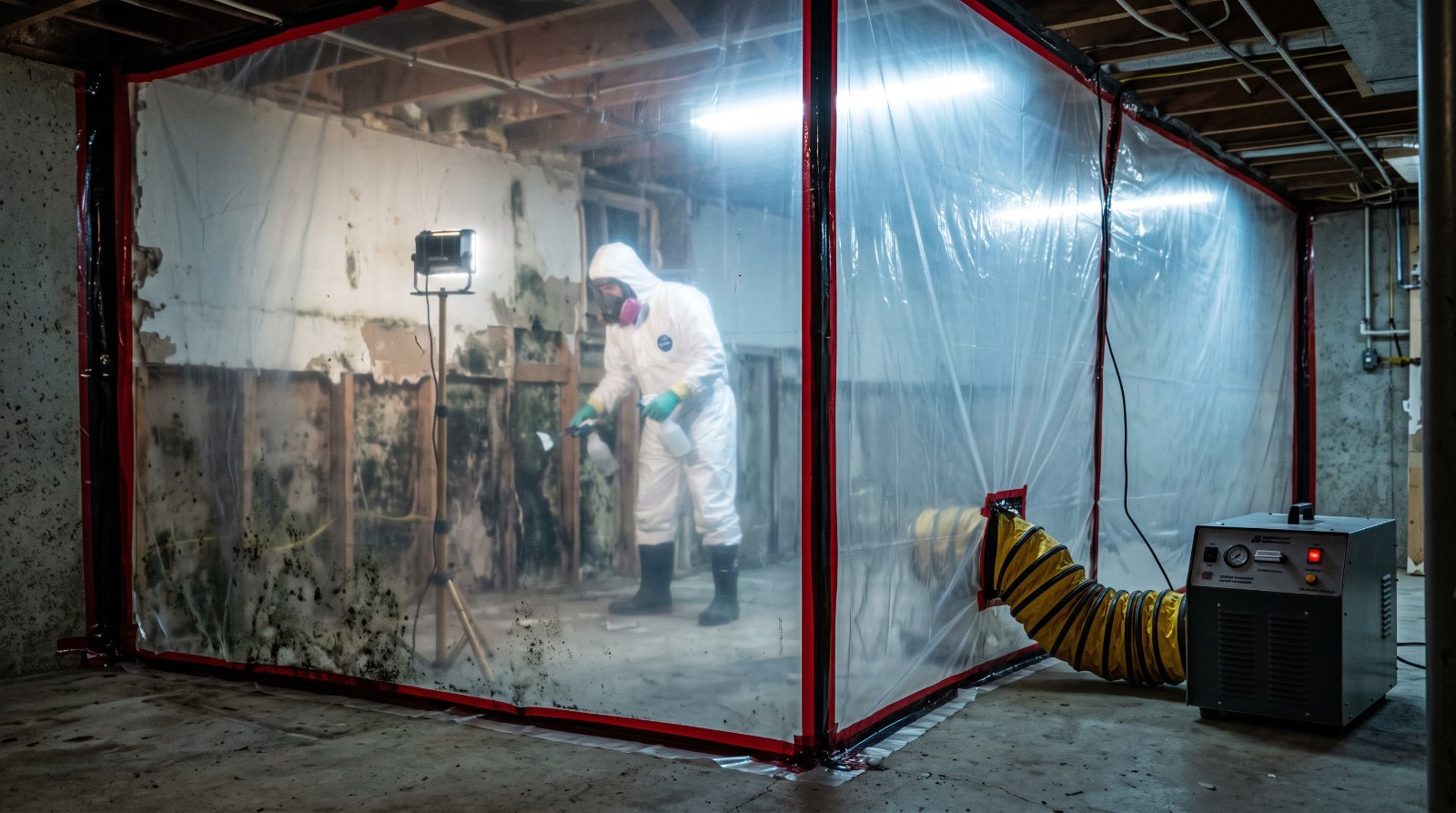
Mold is a moisture problem wearing a costume
Fairview sits on the lake plain with a high water table in places, and basements here take groundwater pressure through block walls even without a visible leak. Persistent dampness rather than a single event is the usual cause of what we find.
Bluff and ravine lots add drainage problems. Water moves downhill toward foundations, and a downspout discharging three feet from a wall is enough to keep a basement corner wet all season.
We also see a lot of attic mold in this area: bath fans venting into the attic instead of outside, plus insufficient soffit ventilation. It shows as dark staining on the north-slope sheathing and has nothing to do with the roof leaking.
Do not disturb visible growth, and do not run fans on it — that moves spores through the building. Photograph what you can see, note when you first smelled or saw it, and leave it alone until someone meters the space.
All services in Fairview
Working with your carrier
We document the loss, provide a written scope, and deal with your adjuster directly. You choose who does the work — that decision is yours, not your insurance company's.
How claims work →The sequence on a mold job
Assessment
On-site inspection, moisture mapping and a written scope. $250, credited back to your invoice if you hire us for the remediation.
Find the water
Mold is a symptom. Until the moisture source is identified, remediation is temporary and everyone knows it.
Containment and removal
Sealed containment, negative air, HEPA filtration, and removal of affected porous material rather than surface treatment.
Fix the cause
Vapor barrier, drainage, ventilation or dehumidification, so it does not return next season.
Fairview mold questions
There is black staining on my attic sheathing. Is that dangerous?
It is a moisture problem before it is a health problem. It usually means bath fans venting into the attic or blocked soffit ventilation. We treat the sheathing and fix the airflow, or it comes back.
What does a mold assessment cost?
$250, credited back to your invoice if you hire us for the remediation.
My basement is damp but I have never had a flood. Is that a mold risk?
Yes. Sustained relative humidity above roughly 60 percent grows mold without any liquid water involved. A properly sized dehumidifier is cheaper than remediation.