Two rivers and a very steep town
Oil City sits where Oil Creek meets the Allegheny River, built up steep hillsides on both sides of the water. That topography drives most of what we are called for, and in two opposite directions.
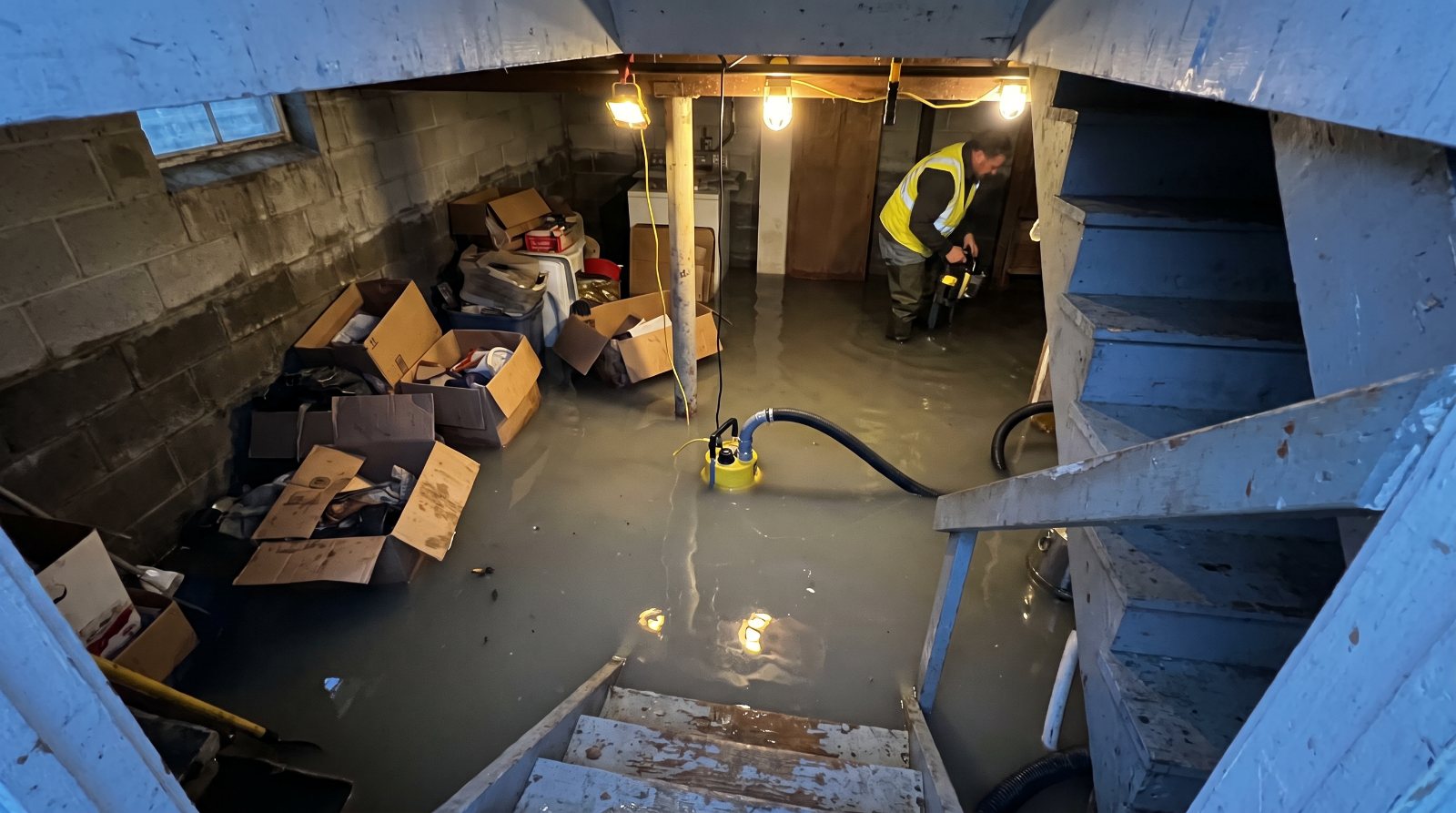
Down in the flats near the confluence, the water table is high and surface flooding in heavy rain or rapid melt is a genuine risk. Those are usually coverage exclusions rather than claims, and the water is contaminated rather than clean, so porous material comes out rather than being dried in place.
Up on the hillsides the problem inverts: water runs downhill fast and arrives at foundations under pressure. Hillside properties get lateral water intrusion through basement walls that a flat lot would never see, and inadequate grading or a blocked footer drain turns every heavy rain into a wet basement. The housing is largely oil-era — big frame houses, stone foundations, plaster interiors — and a good deal of it is under-occupied relative to its size, so leaks run longer before discovery.
Oil City is an outer response area at roughly two hours, covered 24 hours a day with an honest ETA on the call.
Shut the water main off if it's a supply leak. Kill power at the breaker to the affected area if water is near outlets — never wade into standing water to reach the panel. Lift what you can. Photograph everything before it's touched.
Oil City areas we serve
City of Oil City · Cornplanter Township · Cranberry Township · Rouseville · Siverly · North Side · South Side · Route 8 corridor · Route 62 corridor · Allegheny & Oil Creek confluence
All services in Oil City
Hillside and river-flat losses
Hillside lateral intrusion
Water running downhill arrives at foundation walls under pressure. Grading and footer drains are usually the real cause.
Confluence flooding
Low-lying flats near the rivers taking genuine surface water, handled as contaminated.
Frozen supply lines
Inland cold in older, largely uninsulated housing stock.
Under-occupied large homes
Oil-era houses where a leak in an unused portion runs for days.
Oil City questions
How long to reach Oil City?
Roughly two hours from Erie. We will say so plainly. On an active leak the dispatcher gets you shutting off and stabilising while the crew travels.
Water comes through my basement wall on a hillside lot. What is wrong?
Almost always grading or drainage rather than the wall itself. Water moving downhill arrives under hydrostatic pressure and finds any weakness. Fixing it usually means redirecting water above the house — grading, gutters and extensions, and a working footer drain — not just sealing the inside face.
Is hillside seepage covered by insurance?
Generally not — groundwater intrusion is a standard exclusion. A burst supply line is a different thing entirely. We will identify which you have and tell you before you file.
Do you cover Rouseville and Cranberry too?
Yes, along with Cornplanter Township and the surrounding Venango County area. Outer parcels add travel time.