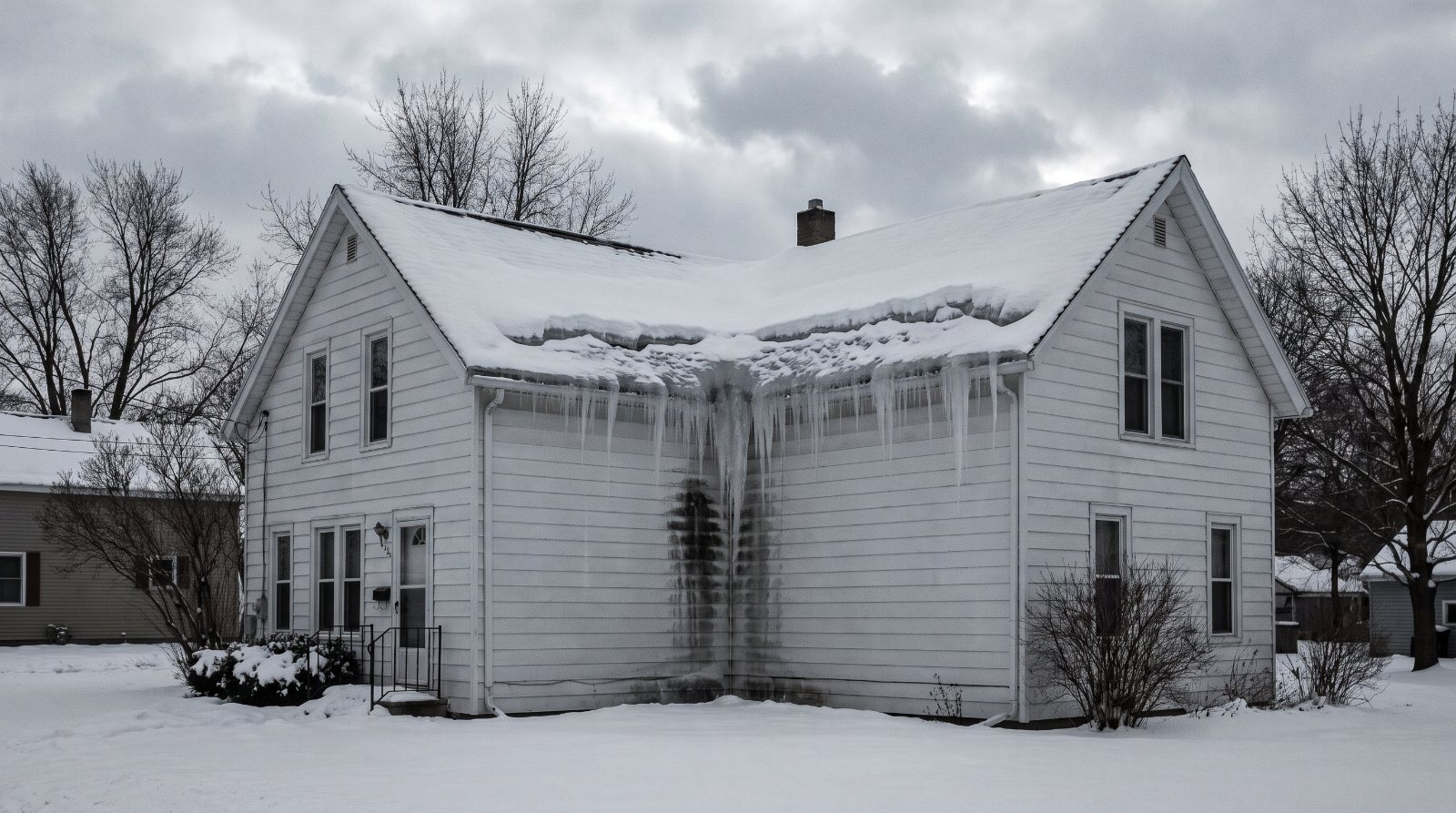
Some of the oldest buildings in the county
Waterford has genuinely historic housing — some of the oldest continuously occupied buildings in Erie County sit in and around the borough. That brings restoration considerations you do not get in newer stock: original plaster on lath, stone and rubble foundations, hand-dug basements with dirt or early poured floors, and additions layered on across two centuries with plumbing routed accordingly.
Plaster is the practical difference. It holds water longer than drywall, it delaminates from lath rather than crumbling, and owners of historic interiors usually do not want it replaced with drywall. Where the readings allow, we dry it in place, which takes longer and needs more monitoring but preserves what makes the house worth owning.
Outside the borough the parcels get larger and nearly everything is on private well and septic. A surcharged or failed septic system backing into a basement is a Category 3 loss handled as biohazard work, and it is usually uncovered without a specific policy endorsement. Outbuildings and unoccupied wings also mean leaks get found late.
Waterford and the surrounding township run about 65 minutes from Erie.
Shut the water main off if it's a supply leak. Kill power at the breaker to the affected area if water is near outlets — never wade into standing water to reach the panel. Lift what you can. Photograph everything before it's touched.
Waterford areas we serve
Waterford Borough · Waterford Township · LeBoeuf Township edge · Route 19 corridor · Route 97 corridor · High Street · Cherry Street · Lake LeBoeuf area · Fort LeBoeuf area
All services in Waterford
Old buildings, specific problems
Plaster & lath water damage
Holds moisture far longer than drywall and delaminates rather than crumbling. Dried in place wherever the readings allow.
Septic failures & backups
Rural systems surcharging into basements. Category 3 handling, and generally uncovered without an endorsement.
Stone foundation seepage
Rubble and stone walls with no waterproofing against a seasonal water table.
Late-discovered leaks
Outbuildings and unused wings where a split line runs unnoticed for days.
Waterford questions
How fast can you get to Waterford?
Roughly 65 minutes for the borough and township. Outer rural parcels add some travel time and the dispatcher will tell you how much when you call.
Will you rip out my original plaster?
Not if we can avoid it. Plaster can frequently be dried in place with enough time and monitoring, and on a historic interior that is almost always the right call. Where a section has genuinely failed we will show you the readings rather than just make the decision for you.
My septic backed up. What is the first step?
Stay out of the area and keep children and pets away. Do not mop it. That is Category 3 water, so it needs containment, removal of porous materials, and proper decontamination rather than cleaning. Call and we will walk you through securing the area.
Do you handle historic restoration properly?
We handle the water, fire, mold and biohazard side to the same standard as anywhere else, and we are careful about what comes out. For specialist historic joinery or masonry replacement we will tell you honestly when a preservation trade should do that portion.