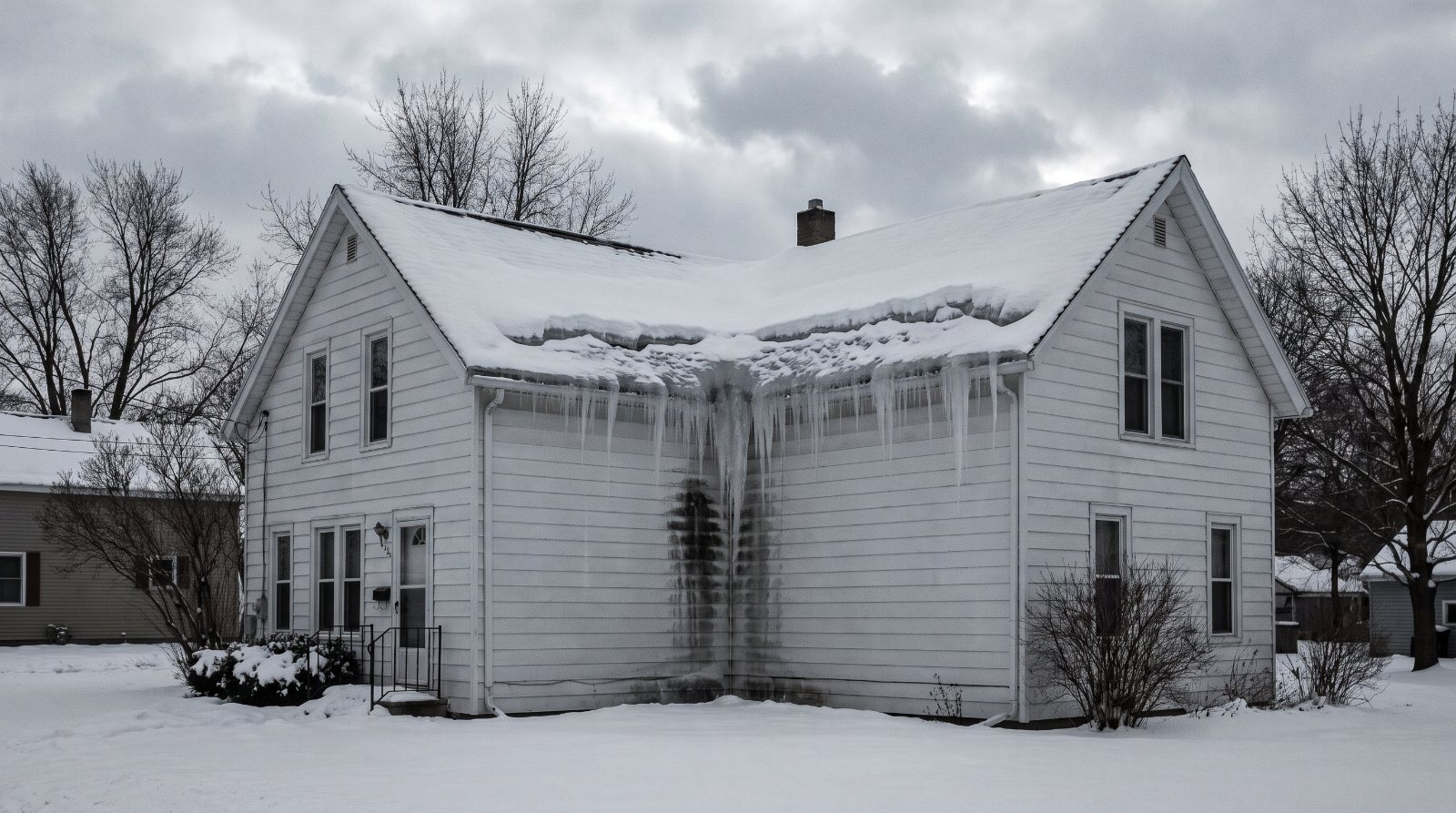
Suburban houses on rural systems
McKean sits in the band between suburban Millcreek and rural southern Erie County, and its housing reflects that. A lot of it is newer or mid-century suburban-style construction — finished basements, attached garages, bonus rooms over garages — but sitting on larger lots and frequently on private well and septic rather than municipal service.
That combination produces a specific problem. The house has the finished square footage and porous materials of a suburban home, but the wastewater system of a rural one. When a septic system surcharges into a finished lower level, you get Category 3 water in a room full of carpet, pad and drywall — a biohazard job and a full demolition rather than a drying job.
The other frequent calls are the ones that come with the construction type: supply lines in unheated garages and rooms built over them splitting in a hard freeze, water heater and appliance connections letting go into a finished area, and crawl space moisture feeding mold growth in the framing above.
McKean runs about 55 minutes from our Erie staging point, covering the borough and township.
Shut the water main off if it's a supply leak. Kill power at the breaker to the affected area if water is near outlets — never wade into standing water to reach the panel. Lift what you can. Photograph everything before it's touched.
McKean areas we serve
McKean Borough · McKean Township · Sterrettania · Route 99 corridor · Route 98 corridor · Route 20 corridor edge · Middle Road · Lake Pleasant Road area · Kuhl Road area
All services in McKean
The combination that hurts
Septic into finished space
A rural wastewater system backing into a suburban finished basement. Category 3 water, full removal.
Garage & bonus room lines
Supply runs through unheated garages and the rooms built above them are first to split.
Crawl space moisture
Bare soil and poor ventilation loading moisture into the framing above, showing up as a musty smell upstairs.
Appliance & heater failures
Washer connections and tanks letting go next to finished square footage.
McKean questions
How fast can you get to McKean?
Roughly 55 minutes, covering the borough and township. The dispatcher will confirm a live ETA when you call.
Septic backed up into my finished basement. What happens?
Stay out of it. That is Category 3 water in a room full of porous material, so carpet, pad, drywall and insulation it reached have to come out — they cannot be disinfected in place. We contain the area, remove, decontaminate, dry, then rebuild. Do not mop it, because that spreads contamination into clean space.
Is a septic backup covered by insurance?
Only with a water backup or sewer backup endorsement, which is not part of a standard Pennsylvania policy. It is usually an inexpensive add-on. We will check your declarations page with you before the work starts either way.
There is a musty smell but no visible mold. Where do I look?
Out here, very often the crawl space. Odor precedes visible growth almost every time. We take moisture and humidity readings, find the source, and fix that — otherwise remediation just buys you a few months.