Square footage changes the physics
A hundred thousand square feet of warehouse is not a big house. Drying a space that size is a calculation about air volume, dehumidification capacity, and power supply, and getting it wrong means either weeks of unnecessary downtime or a building that was never actually dry.
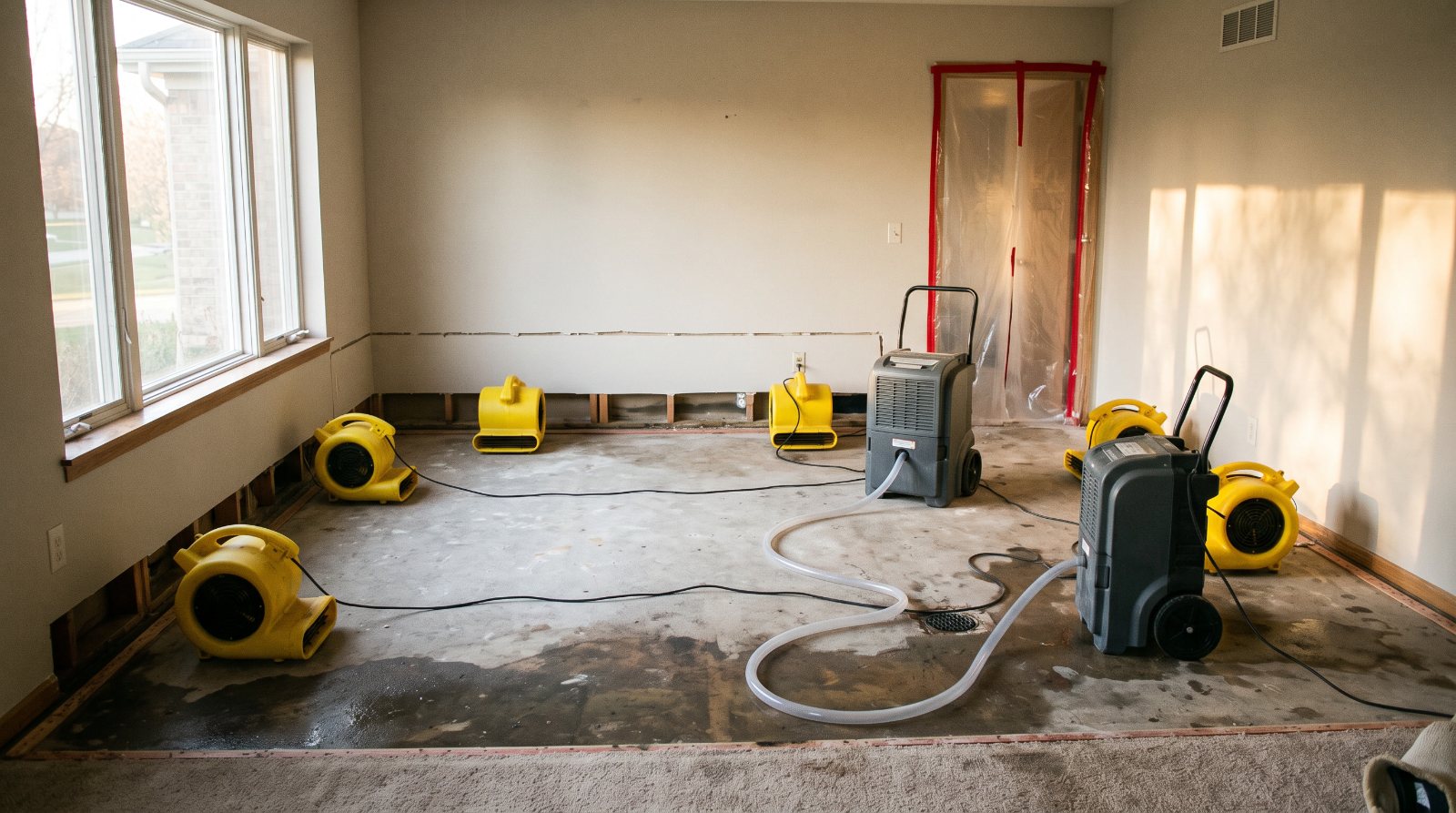
We size equipment to the cubic volume and the material load, and on a large industrial loss that regularly means desiccant dehumidification and generator capacity rather than the portable units that would handle an office. Bringing the wrong equipment to a warehouse is the most common reason these jobs run long.
Racked inventory is usually worth more than the building envelope. Product is triaged fast: what is salvageable, what needs cleaning, what is a write-off. Cardboard wicks water vertically through a pallet stack, so damage is frequently four feet up a rack while the floor looks fine.
Machinery and control systems are a specialist track. Water and airborne contaminants reach bearings, panels and electronics, and corrosion begins within days. Cleaning and corrosion inhibition happen early or they happen too late, and a production line that could have been saved becomes a capital replacement.
Manufacturing losses also come with a downtime cost per hour that dwarfs the restoration invoice. That number drives the sequence: production areas first, then storage, then the office end of the building.
Services for this property
Before you need us
We walk your building, map the shut-offs, and put after-hours contacts and pre-agreed rates on paper. When something fails at 2am, nobody is looking for a valve.
Commercial overview →What changes on this kind of property
Desiccant and generator capacity
Equipment sized to cubic volume and material load, with our own power where the grid is out.
Racked product triage
Fast salvage, cleaning or write-off decisions, documented. Cardboard wicks water further up a stack than people expect.
Corrosion control
Bearings, panels and electronics cleaned and inhibited before corrosion makes the decision for you.
Production first
Downtime cost drives the order of work: production areas, then storage, then the office end.
Questions
How fast can you mobilize for a large industrial loss?
We stage multi-crew responses with our own equipment and fuel, and we run catastrophe deployments out of state, so the mobilization capacity is real rather than theoretical. Call and we will tell you what we can put on site and when.
Can production continue in part of the building?
Often yes. Containment and sequencing let unaffected areas keep running while drying happens elsewhere. That decision is made on safety and air quality, not on convenience.
What happens to inventory that got wet?
It is triaged into salvage, clean-and-return, and write-off, and every category is documented for your carrier. The write-off documentation matters as much as the salvage, because that is what gets paid.